The Real Cost of Protein in India: From Ingredient Price to Affordable Nutrition
Why protein quality, digestibility, cooking methods, serving size and consumer affordability matter more than the price of protein alone.
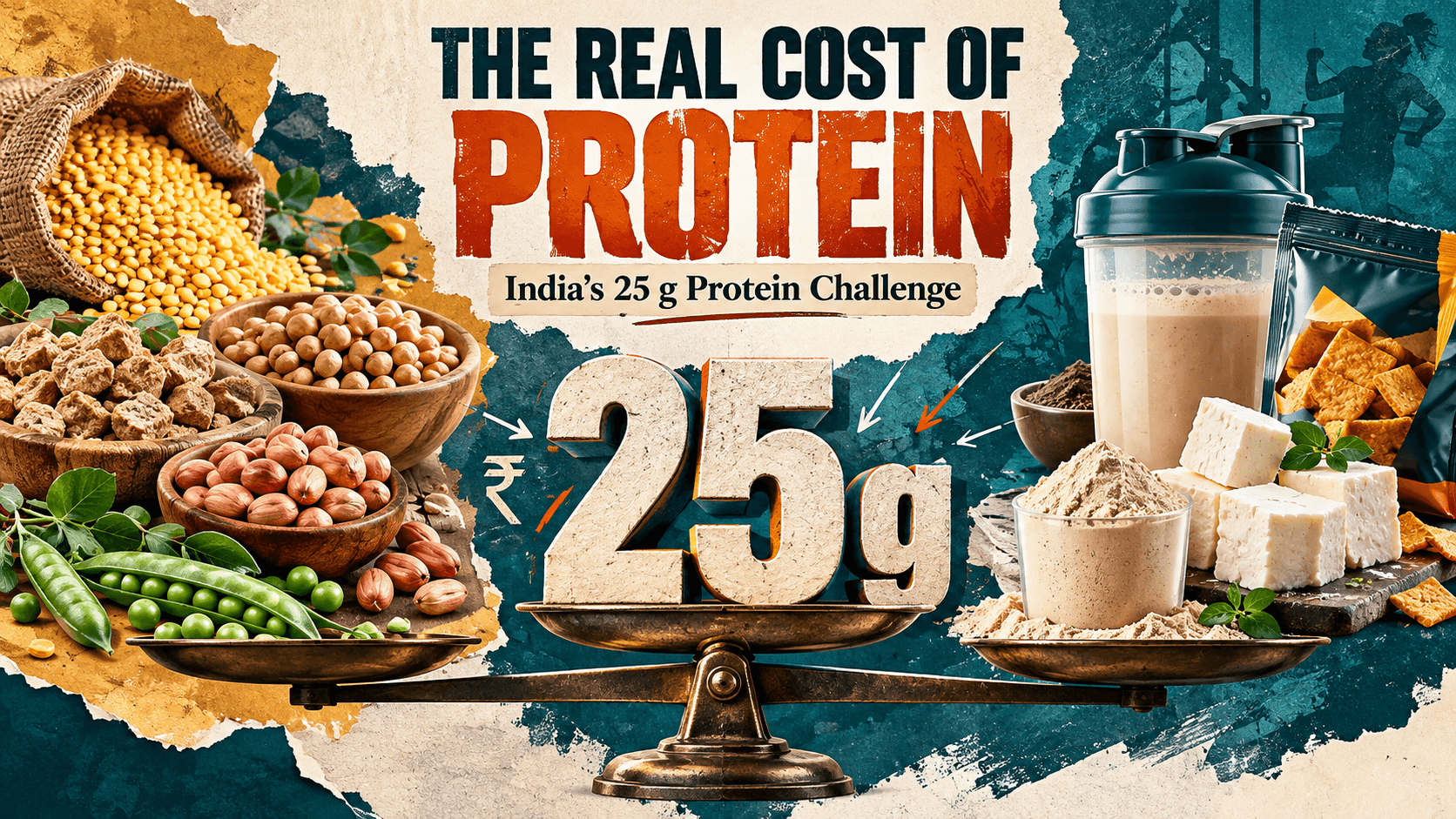
Imagine you are developing a high-protein food product for Indian consumers.
Your objective is simple: deliver 25 grams of nutritionally valuable protein per serving at an affordable price.
You have several options.
You could use whey protein, soy protein, roasted peanuts, besan, moong dal, textured soy chunks or a blend of plant proteins.
Some ingredients are inexpensive. Others are concentrated sources of protein. Some are familiar Indian foods, while others require specialized processing.
But an interesting problem emerges when you start calculating the actual amount of food required to deliver 25 grams of protein.
A concentrated protein powder might deliver the target in a relatively small quantity.
A cooked dal preparation might require a substantially larger serving.
A nut-based product might provide the protein alongside considerable fat and energy.
An inexpensive defatted oilseed flour might look attractive economically but introduce bitterness, texture problems or food safety concerns.
And a protein-enriched snack might offer convenience but cost significantly more than the protein it contains.
The real question is not simply how much protein costs per kilogram. It is how much consumers must pay—and how much food they must eat—to obtain nutritionally meaningful protein.
This is where food science, nutrition, product development and commercial economics intersect.
In the first article of Curious Cubs Innovation's Cost of Nutrition series, we explore the true cost of protein in India through the perspective of both consumers and food R&D professionals.
Our central question is:
Can food technology deliver high-quality protein in a realistic, enjoyable and affordable serving?
This article is designed for readers at different levels of scientific understanding.
Reading level | What you will learn |
|---|---|
ELI5 | Why cheap protein ingredients do not always make cheap protein-rich meals |
Beginner | Protein content, serving size, cost per gram and basic nutrition |
Intermediate | Cooking yields, moisture, amino acids and digestibility |
Advanced | PDCAAS, DIAAS, protein-quality limitations and formulation calculations |
Food R&D professionals | Ingredient selection, processing, cost optimization and commercial feasibility |
Entrepreneurs | How nutrition, sensory acceptance and selling price influence product success |
Imagine buying two bags of food.
Bag A costs ₹100 and contains 20 grams of protein.
Bag B costs ₹150 and contains 50 grams of protein.
Which bag offers cheaper protein?
Although Bag B costs more, it provides more protein for every rupee spent.
Now imagine that Bag A is ready to eat, while Bag B must be cooked with water, oil and spices.
The finished dishes may differ in weight, preparation time, taste and convenience.
This introduces another question: How much of the prepared food must you actually eat to obtain the protein you want?
For example, 100 grams of dry dal and 100 grams of cooked dal are not nutritionally equivalent.
Cooking adds water, increasing the weight of the food without adding protein.
This is why food scientists distinguish between the nutritional composition of an ingredient and the nutritional composition of the finished food.
Protein concentration describes how much protein is present in a given weight of food.
Protein quality describes how well a protein supplies indispensable amino acids, considering their digestibility.
Protein delivery describes how much protein the consumer actually obtains from a realistic serving of the finished food.
These three concepts form the foundation of our analysis.
Protein requirements vary according to age, body weight, physiological condition and dietary needs.
The Indian Council of Medical Research–National Institute of Nutrition (ICMR-NIN) provides population-specific recommendations for dietary protein intake.
For example, its 2020 recommendations identify approximately 54 grams of protein per day for a reference adult man weighing 65 kg and 45.7 grams for a reference adult woman weighing 55 kg.
These are reference values, not personalized prescriptions.
For this article, we use 25 grams of protein as a standardized R&D comparison target.
This allows us to compare very different ingredients and products using the same nutritional quantity.
It does not mean every person should consume 25 grams of protein at every meal.
Children, older adults, pregnant women, athletes and individuals with particular medical conditions may have different nutritional requirements.
Our objective is to evaluate the efficiency of different protein delivery systems.
The simplest way to compare protein economics is to calculate how much money is required to purchase a given quantity of protein.
Consider three hypothetical ingredients.
Ingredient | Protein concentration | Ingredient price | Cost of 25 g declared protein |
|---|---|---|---|
Ingredient A | 50% | ₹150/kg | ₹7.50 |
Ingredient B | 80% | ₹400/kg | ₹12.50 |
Ingredient C | 90% | ₹900/kg | ₹25.00 |
Illustrative formulation examples; these are not verified retail quotations.
The calculation is:
Cost of 25 g protein = (25 ÷ protein fraction) × ingredient price per gram
For Ingredient A:
Protein concentration = 50%
Ingredient required = 25 ÷ 0.50 = 50 g
Cost = 50 × ₹0.15 = ₹7.50
Ingredient A provides the cheapest declared protein in this example.
However, it requires almost twice as much ingredient as Ingredient C to deliver the same quantity of protein.
This difference becomes important when developing compact foods, beverages, snacks and protein-enriched products.
An ingredient that is cheaper per gram of protein may still require additional formulation components, processing or larger packaging.
The cheapest protein ingredient is not necessarily the cheapest acceptable finished product.
India has access to a remarkably diverse range of protein-containing foods.
However, these foods differ substantially in their protein concentration, moisture, fat, carbohydrate, amino-acid composition, preparation requirements and cost.
For a meaningful comparison, we need to examine several categories.

Common examples include:
Moong dal
Toor or arhar dal
Masoor dal
Chana dal
Urad dal
Rajma
Whole chickpeas
Dried green peas
Dry pulses can be economical protein sources and also contribute dietary fibre, carbohydrates, minerals and other nutrients.
However, they generally contain substantially less protein per 100 grams than concentrated protein powders.
Their final serving weight also depends heavily on cooking conditions.
Fresh legumes include:
Edamame or immature green soybeans
Fresh green peas
Fresh green chana
Fresh green tuver or pigeon peas
These ingredients have relatively high moisture contents compared with dried pulses.
As a result, their protein concentration per 100 grams of fresh edible material is usually lower than that of their dried counterparts.
Their economics must also account for shelling yield, seasonal availability and storage losses.
For example, the cost of green peas purchased in pods cannot be compared directly with the cost of dried peas unless the edible portion is considered.
Sprouting is commonly used with moong, chana and several other legumes.
During germination, enzymes become active, stored nutrients are mobilized and some antinutritional compounds may decrease.
However, sprouting also increases moisture content.
Consequently, protein expressed per 100 grams of fresh sprouts may be much lower than protein expressed per 100 grams of the original dry seeds.
This does not automatically mean that sprouting destroys most of the protein.
It illustrates the importance of comparing foods on a consistent basis.
Sprouting may influence digestibility and nutrient availability, but improvements depend on the legume, germination conditions and subsequent processing.
Raw sprouts also require careful food safety management because germination conditions can support microbial growth.
Peanuts, sesame seeds, almonds, cashews, walnuts and pine nuts all contribute protein.
However, they also contain substantial amounts of fat.
This creates an important nutritional trade-off.
A person attempting to obtain 25 grams of protein exclusively from certain nuts may consume a relatively large quantity of energy.
Therefore, protein affordability should not be evaluated without considering the accompanying calories.
Nuts and seeds can be valuable components of a balanced diet without necessarily being efficient primary protein-delivery systems.
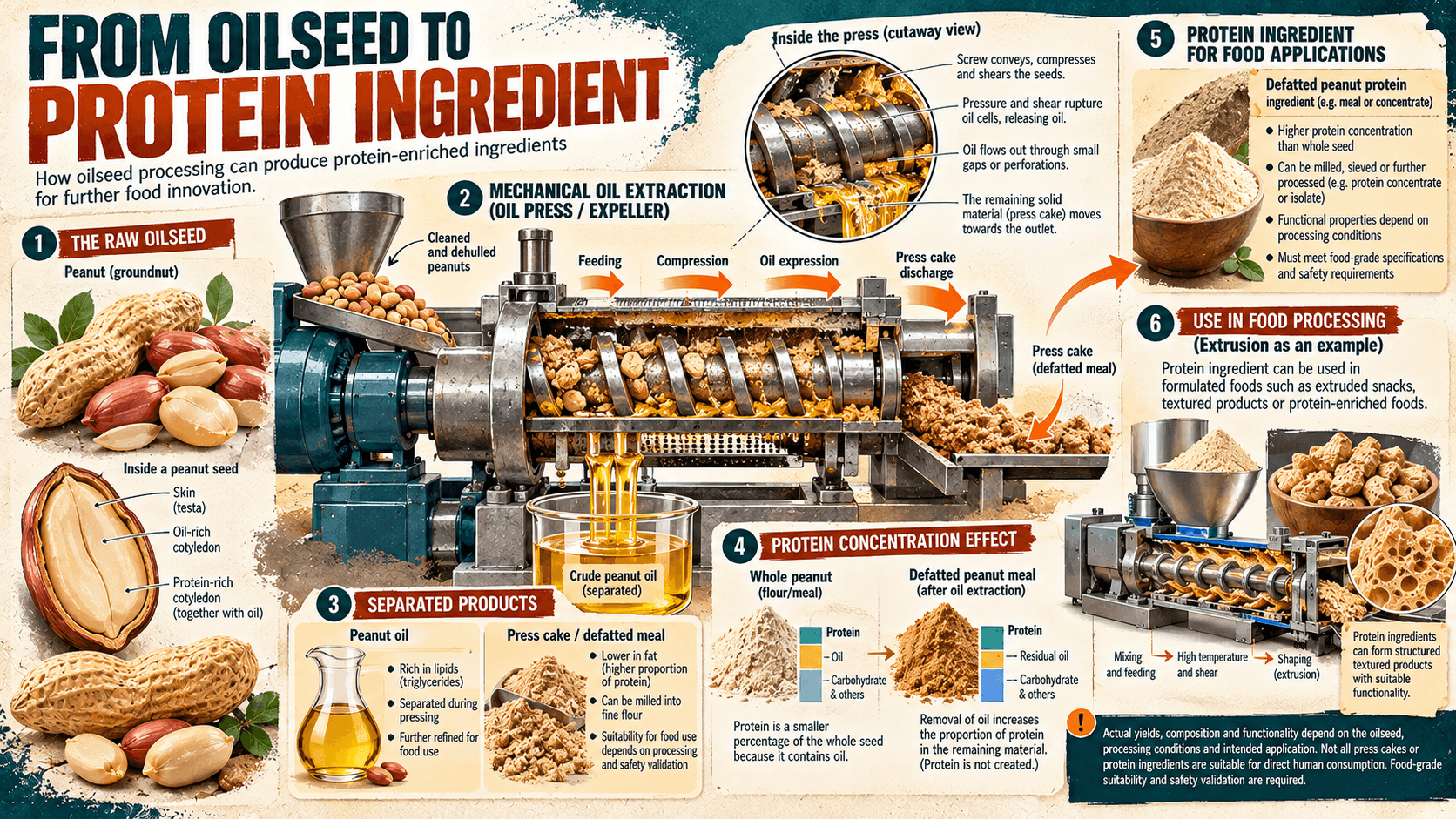
Defatted peanut flour, defatted sesame flour and suitable soy meals are particularly interesting for food R&D.
Oil extraction removes part of the fat fraction and can increase protein concentration in the remaining material.
These ingredients may offer opportunities for affordable protein enrichment, savoury foods and extrusion-based products.
However, oilseed meals intended for animal feed must not automatically be considered suitable for human consumption.
Food-grade specifications, processing history, residual solvents where applicable, microbiological quality, allergen controls, oxidation and relevant contaminants must be evaluated.
For peanuts, aflatoxin control is especially important.
Textured soy chunks and other extruded protein ingredients are designed to provide structure and functionality.
High-moisture or low-moisture extrusion can modify protein organization, hydration behaviour and texture.
Extruded protein can be incorporated into savoury snacks, meat alternatives, meal components and ready-to-cook foods.
But the finished protein concentration depends on the formulation and processing conditions.
A dry textured ingredient may contain substantial protein, yet its weight can increase considerably after hydration.
Protein concentrates, isolates and blends offer high protein concentrations.
Examples include whey protein, soy protein isolate, pea protein and mixed plant-protein systems.
These ingredients are useful when a formulation must deliver substantial protein in a relatively small serving.
However, protein enrichment can create challenges involving solubility, viscosity, sedimentation, chalkiness, bitterness and thermal stability.
The ingredient with the highest protein concentration is not automatically the best choice for every food matrix.
Retorted rajma, chole, cooked dal and other shelf-stable legume products offer convenience.
They can reduce preparation time and make traditional foods easier to consume.
However, their economics include processing, packaging, distribution and shelf-life requirements.
The protein concentration of a retorted product also depends on the ratio of legumes to water, gravy, oil and other ingredients.
Comparing a 300 g retorted chole pack with 300 g dry chickpeas would therefore be misleading.
Fresh mushrooms and moringa leaves contribute useful nutrients, but their protein density and realistic serving sizes must be evaluated before positioning them as primary protein sources.
Dried mushrooms and moringa leaf powders contain less moisture, which can increase protein concentration per 100 grams.
However, drying does not automatically improve protein quality.
Emerging ingredients such as yeast protein and mycoprotein also deserve investigation.
These may offer technological advantages, but their nutritional performance, ingredient cost, regulatory suitability and consumer acceptance require ingredient-specific evidence.
One of the most important variables in protein economics is moisture.
When dry pulses are cooked, they absorb water. Their total weight increases, but water does not contribute protein.
Consequently, the amount of protein per 100 grams of cooked food decreases.
This does not necessarily mean that the original protein has disappeared.
It means the protein has been distributed through a larger quantity of food.
Consider a hypothetical dry dal containing 24% protein.
To obtain 25 grams of declared protein:
25 ÷ 0.24 = 104.2 grams of dry dal
Now assume the dal is cooked using three different quantities of retained water.
Preparation | Finished-weight multiplier | Finished portion containing 25 g protein |
|---|---|---|
Very thick dal | 1.8× | 188 g |
Moderately thick dal | 2.5× | 260 g |
Thin dal | 3.5× | 365 g |

Illustrative mass-balance calculations assuming complete protein retention and no additional ingredients.
The same quantity of dry dal supplies the protein in all three examples.
What changes is the final serving weight.
This has significant implications for product development.
A consumer may comfortably eat 188 grams of thick dal as part of a meal.
A 365-gram portion may be more difficult to accommodate, depending on the eating occasion and the other foods being consumed.
However, reducing water is not automatically the best solution.
An excessively concentrated dal may become too thick, pasty or difficult to consume.
The correct formulation depends on the desired texture, eating experience and target consumer.
For cooked legumes, the relevant question is not simply:
How much protein does the dry ingredient contain?
It is:
How much protein can be delivered in a prepared portion that consumers will realistically eat?
This requires measurement of cooking yield, final moisture content, protein retention and sensory acceptability.
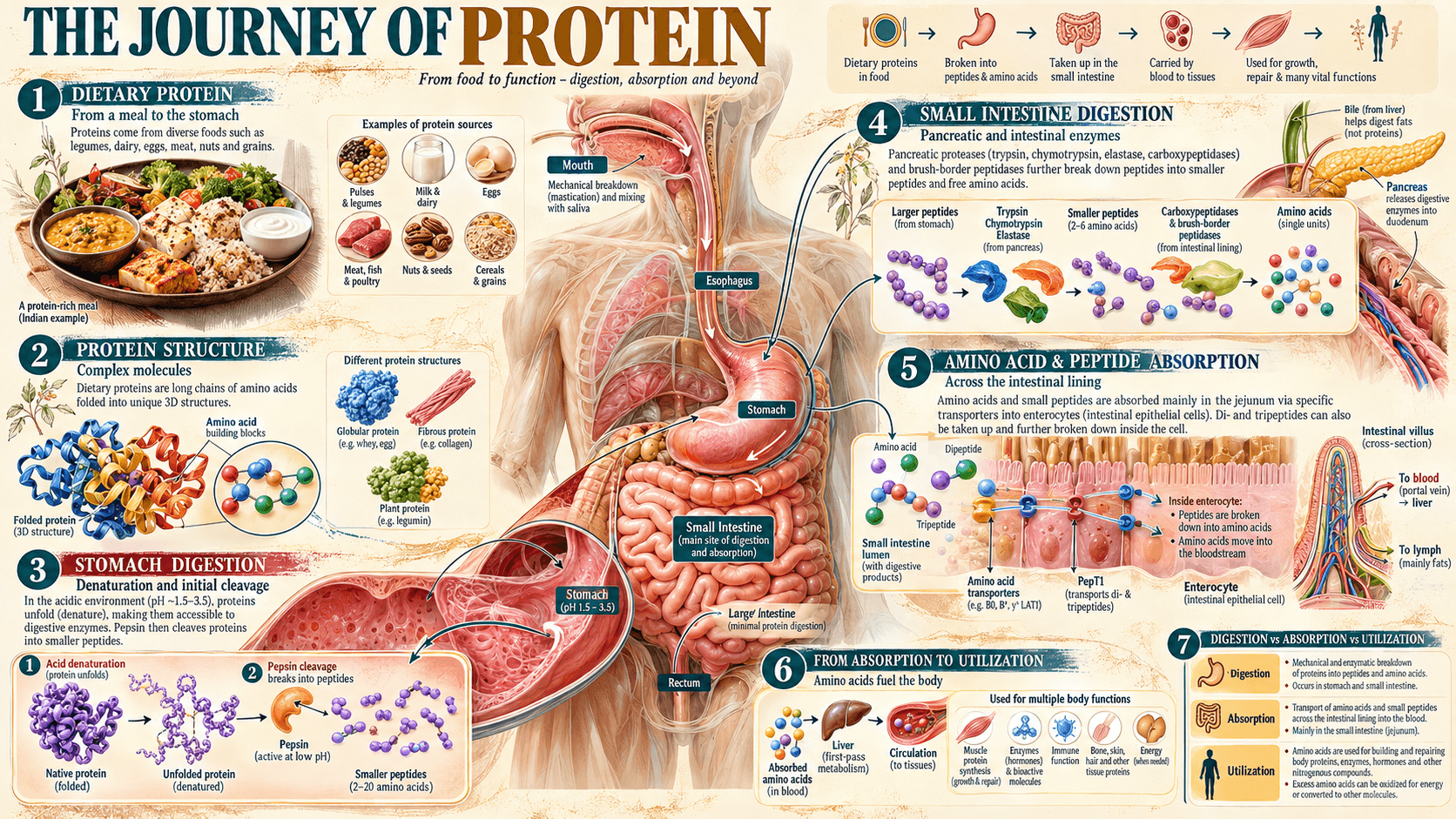
Protein is composed of amino acids.
During digestion, dietary proteins are broken down into smaller peptides and amino acids, which are absorbed and used by the body.
Some amino acids can be synthesized by the human body.
Others must be supplied through the diet. These are known as indispensable or essential amino acids.
A protein's nutritional quality depends partly on whether it supplies these amino acids in appropriate proportions and how digestible they are.
For example, cereal proteins are often relatively limited in lysine, while many pulse proteins are relatively limited in sulfur-containing amino acids such as methionine and cysteine.
Combining suitable protein sources can improve the amino-acid balance of a meal or formulated product.
However, the nutritional quality of a blend must be evaluated from its combined amino-acid composition and digestibility, rather than assuming that every combination produces a complete or superior protein.
PDCAAS stands for Protein Digestibility-Corrected Amino Acid Score.
It evaluates protein quality using two major factors:
The protein's indispensable amino-acid composition relative to a reference requirement pattern.
A correction for protein digestibility.
The conventional PDCAAS score is truncated at 1.00.
A score of 1.00 indicates that the protein meets or exceeds the relevant reference amino-acid pattern after the method's digestibility correction.
It does not mean that exactly 100% of the protein is absorbed.
It also does not mean that every gram of consumed protein is converted into muscle.
PDCAAS is a nutritional quality index, not a direct measurement of protein absorption or metabolic utilization.
DIAAS stands for Digestible Indispensable Amino Acid Score.
The Food and Agriculture Organization's 2013 expert consultation recommended DIAAS as an improved approach to protein-quality evaluation.
Unlike conventional PDCAAS, DIAAS evaluates the digestibility of individual indispensable amino acids at the end of the small intestine.
It can therefore provide a more informative assessment of amino-acid availability.
DIAAS values are also not ordinarily truncated at 100, allowing differences among high-quality proteins to remain visible.
However, reliable DIAAS measurements are not available for every traditional food, ingredient or processed product.
This is particularly important when comparing Indian mixed dishes, sprouts, extruded products and emerging protein ingredients.
Imagine two hypothetical protein ingredients.
Both contain 25 grams of declared protein.
One has an applicable PDCAAS of 1.00.
The other has an applicable PDCAAS of 0.70.
These ingredients should not automatically be considered nutritionally equivalent simply because their protein labels display the same quantity.
However, the lower score must not be interpreted as meaning that 30% of the protein is unabsorbed.
The difference reflects the protein-quality assessment method, including amino-acid adequacy and digestibility.
For preliminary formulation screening, a simplified protein-quality-adjusted calculation can be useful.
We can define:
PDCAAS-adjusted protein index = Declared protein × applicable PDCAAS
Using this index, the declared protein required to reach a standardized value of 25 grams is:
Required declared protein = 25 ÷ applicable PDCAAS
Consider three hypothetical proteins.
Protein | Assumed PDCAAS | Declared protein required for a 25 g adjusted index |
|---|---|---|
Protein A | 1.00 | 25.0 g |
Protein B | 0.85 | 29.4 g |
Protein C | 0.65 | 38.5 g |
These calculations demonstrate how protein-quality differences can affect an economic screening model.

However, there are important limitations.
The adjusted index is not equivalent to 25 grams of absorbed protein.
It does not account for every aspect of protein utilization, individual nutritional status or meal composition.
The method also depends on the availability of a scientifically appropriate PDCAAS value for the actual ingredient or finished product.
Published values for soy isolate, chickpea flour or peanut protein cannot automatically be assigned to textured soy chunks, cooked chickpeas or commercial peanut snacks.
Processing, formulation and ingredient composition may affect the relevant nutritional properties.
For this reason, a quality-adjusted cost comparison should only be presented where defensible protein-quality evidence exists.
Where such evidence is unavailable, declared-protein economics should be reported separately.
To understand the practical implications, consider several hypothetical formulation scenarios.
The purpose of this comparison is to illustrate the relationship between protein concentration, processing and finished serving weight.
These are not measurements of commercial products.

Food format | Assumed protein concentration | Ingredient required for 25 g declared protein | Illustrative finished portion |
|---|---|---|---|
Whey protein powder | 80% | 31.3 g powder | 231 g beverage after adding 200 g water |
Dry textured soy | 53% | 47.2 g dry | 142 g hydrated material at 3× yield |
Besan-based preparation | 21% | 119.0 g besan | 238 g finished food at 2× yield |
Dry dal preparation | 24% | 104.2 g dry | 260 g cooked dal at 2.5× yield |
High-protein paneer | 28% | 89.3 g paneer | 89 g before recipe additions |
All protein concentrations and preparation yields are illustrative assumptions. Actual products require ingredient-specific analysis and measured processing yields.
Several observations emerge.
First, protein concentration strongly influences the quantity of ingredient required.
Second, water can substantially increase finished serving weight without contributing additional protein.
Third, food format matters.
A 231-gram beverage and a 238-gram solid meal may have similar weights but very different consumption experiences.
Fourth, the comparison above concerns declared protein only.
It does not establish equivalence in PDCAAS, DIAAS or physiological protein utilization.
The best protein source is not necessarily the one requiring the smallest serving.
A larger serving may be appropriate for a complete meal, while a smaller serving may be preferable for a snack or supplement.
The correct target depends on the product's intended role in the diet.
To investigate protein affordability, we can combine Indian retail price observations with food-composition information.
However, price comparisons require particular care.
Retail prices change according to location, season, pack size, brand, promotions and distribution channel.
Protein concentrations also vary according to variety, moisture content and product formulation.
The following table uses preliminary price observations collected during this research discussion. They are retained as historical screening examples, not verified current prices.
Food | Reference price | Assumed protein/100 g | Approximate cost per 25 g declared protein |
|---|---|---|---|
Dry textured soy chunks | ₹137/kg | 53 g | ₹6.46 |
Dried green peas | ₹119.04/kg | 24 g | ₹12.40 |
Besan | ₹131.42/kg | 21 g | ₹15.65 |
Raw peanuts | ₹205.44/kg | 25.8 g | ₹19.91 |
High-protein bread | ₹99/270 g | 23.7 g | ₹38.67 |
High-protein milk | ₹55/450 ml | 5.56 g/100 ml | ₹55.00 |
Pre-boiled rajma | ₹50/250 g | 8.7 g | ₹57.47 |
High-protein paneer | ₹155/200 g | 28 g | ₹69.20 |
Whey concentrate | ₹2,199/kg | 64.9 g | ₹84.75 |
Frozen green peas | ₹105/500 g | 5.4 g | ₹97.22 |
Fresh green peas | ₹130/500 g | 5.4 g | ₹120.37 |
Cashews | ₹549/500 g | 18.2 g | ₹150.82 |
Protein bar | ₹139/bar | 20 g/bar | ₹173.75 |
Frozen edamame | ₹429/500 g | 11.9 g | ₹180.25 |

Important: This table combines preliminary retailer observations and assumed or previously recorded nutrition information. Values have not been uniformly revalidated against current labels. Edamame cost assumes the quoted pack weight is entirely edible; if pods are included, the effective protein cost will be higher. Some branded product concentrations require confirmation. The whey value reflects the earlier product-specific serving declaration rather than a typical 80% concentrate assumption.
The table must therefore be interpreted as an exploratory comparison, not a definitive national ranking.
Nevertheless, it demonstrates an important principle.
Dry, concentrated protein sources can appear highly economical on a declared-protein basis.
Fresh foods and convenience products often contain more water or additional processing costs.
But the cheapest ingredient is not necessarily the most nutritionally appropriate or commercially attractive finished food.
A final market comparison must account for edible yield, recipe composition, preparation costs and validated nutrition declarations.
Traditional Indian foods deserve particular attention because they are already integrated into everyday eating habits.
Dal, chilla, dosa, sprouts, roasted chana and legume-based preparations are familiar, versatile and widely consumed.
This familiarity may provide a practical advantage over unfamiliar protein formats.
However, familiarity alone does not establish nutritional superiority.
Dal provides protein alongside carbohydrates, fibre and other nutrients.
Its protein concentration depends on the dry pulse, cooking method and amount of retained water.
A thin dal may be suitable as part of a complete meal, but it may be inefficient as a compact high-protein serving.
A thicker preparation can increase protein concentration per 100 grams of finished food.
The R&D opportunity is to improve protein delivery without sacrificing desirable texture and flavour.
Besan, moong, urad and other pulse-based ingredients can be used in savoury batters.
These formats offer opportunities for protein enrichment because they can incorporate additional protein ingredients.
However, adding protein concentrates or isolates may alter batter viscosity, water absorption, spreading, gelation and cooked texture.
A successful formulation must maintain the cooking behaviour consumers expect.
Roasted chana, textured soy snacks and protein-enriched extrudates can offer convenient protein delivery.
Their lower moisture content may improve protein concentration per 100 grams compared with cooked preparations.
However, extrusion and roasting influence texture, flavour and potentially nutritional quality.
The final protein content also depends on added starches, oils, seasonings and other ingredients.
The opportunity is to develop convenient foods that deliver meaningful protein without becoming excessively hard, dry or expensive.
Oilseed processing creates an interesting opportunity for food innovation.
Peanuts and sesame seeds contain both protein and oil.
When oil is removed, the remaining material can become relatively enriched in protein.
For example, suitable defatted peanut flour may contain considerably more protein per 100 grams than whole peanuts.
This makes defatted oilseed ingredients potentially attractive for high-protein formulations.
However, several challenges must be addressed.
Defatting and subsequent processing can change hydration, dispersibility, emulsification and texture.
The resulting flour may behave differently from whole-seed flour.
Peanut and sesame ingredients may contribute strong characteristic flavours.
Defatted meals may also introduce bitterness or astringency depending on their composition and processing history.
Food-grade suitability is essential.
Peanut ingredients require appropriate aflatoxin controls, while sesame and peanut allergens must be managed and declared according to applicable requirements.
A low-cost by-product is not automatically a low-cost food ingredient.
Additional cleaning, processing, quality assurance, transport and formulation costs may eliminate part of the apparent economic advantage.
The real R&D opportunity is to convert suitable, safe, protein-rich oilseed materials into acceptable food ingredients—not merely to identify inexpensive industrial residues.
Food innovation is expanding beyond conventional dairy and plant proteins.
Microbial proteins, including certain yeast-derived proteins and mycoproteins, are receiving increasing attention.
These ingredients may offer useful nutritional or technological characteristics, depending on the production process and final composition.
Mintel's 2026 ingredient research identifies yeast protein as an emerging ingredient for protein-enriched foods, including applications in bread and noodles.
The report also cites high protein-quality potential for certain yeast ingredients.
However, any specific PDCAAS or DIAAS claim must be supported by suitable primary evidence for the actual ingredient.
Another important direction is protein blending.
Combining proteins from different sources can potentially improve amino-acid balance, functionality or sensory characteristics.
For example, a legume protein may be combined with another protein source to address a limiting amino-acid pattern.
But blending can also introduce new challenges.
Different proteins may respond differently to pH, heating, hydration and shear.
They may aggregate, interact with starches or influence flavour release.
Therefore, protein blending should be treated as a formulation strategy requiring experimental optimization.
The objective is not simply to combine multiple protein names on an ingredient label.
It is to create a system that performs better nutritionally, technologically or economically than its individual components.
Protein enrichment is a formulation objective, not a guarantee of commercial success.
A product may deliver substantial protein but still face poor consumer acceptance.
Several factors can contribute.
Plant proteins can introduce beany, grassy, bitter or astringent notes.
Protein processing may also influence volatile compounds and flavour interactions.
These effects become particularly important at high protein concentrations.
Increasing protein content can alter water binding, viscosity, gelation and structure.
In beverages, excessive protein may contribute to chalkiness or sedimentation.
In extruded snacks, high protein loading may reduce expansion or alter crispness.
In cooked batters, protein enrichment may change spreading and firmness.
A nutritionally impressive formulation may require an impractically large portion.
This is particularly relevant when using relatively low-protein whole foods as the principal protein source.
Consumers purchase finished products, not isolated grams of protein.
Their decisions may reflect taste, convenience, brand familiarity, portion size, perceived health benefits and affordability.
Consumers may prefer recognizable foods and ingredients.
However, acceptance varies by market, consumer group and product category.
Mintel's 2026 US plant-based protein research reported an estimated market decline of 9.7% in value from 2025 to 2026.
The report also emphasized understandable product composition, preparation convenience and tangible consumer benefits.
These findings provide useful commercial context, although US consumer behaviour should not be assumed to represent Indian consumers.
The commercial challenge is to make protein nutrition useful, accessible and desirable—not merely technically achievable.
To understand commercial protein delivery, we also examined a Mintel Global New Products Database (GNPD) export covering nutritional and meal-replacement drinks associated with protein.
The supplied dataset was filtered to the Indian market.
Its export reported 2,196 results, while an earlier technical inspection identified 2,170 unique parsed product records.
Of these, 2,069 had parsable protein declarations, and 797 could potentially support a positive-price cost-per-gram calculation after basic filtering.
These figures are dataset-processing observations, not a count of all protein products sold in India.
The export also contained inconsistencies between package and serving information for some products.
GNPD provides useful evidence about packaged product formats, label-declared protein and recorded prices.
However, it does not independently establish protein digestibility, amino-acid quality or current nationwide retail prices.
For this reason, GNPD-derived calculations should be labelled as cost per gram of label-declared protein.
They should not be presented as the cost of absorbed protein or PDCAAS-1-equivalent protein.
The dataset is particularly valuable for understanding how manufacturers position protein-containing products.
But a broader Cost of Nutrition analysis must also include traditional foods, fresh ingredients and home-prepared meals.
Consider a hypothetical commercial product-development brief.
The objective is to formulate an adult-oriented savoury food that delivers 25 grams of declared protein per serving.
The product should be affordable, convenient, enjoyable and nutritionally appropriate.
A formulation team might evaluate the following approaches.
Formulation strategy | Potential advantage | Main technical challenge |
|---|---|---|
Pulse-based formulation | Familiar ingredients and potentially favourable cost | Serving size, cooking properties |
Soy-textured formulation | High protein density | Hydration, texture and flavour |
Pulse–protein isolate blend | Greater protein concentration | Ingredient cost and functionality |
Defatted oilseed blend | Potential economical protein enrichment | Safety, bitterness and oxidation |
Extruded savoury snack | Convenience and shelf stability | Expansion, texture and protein loading |
Retorted legume meal | Familiar food with preparation convenience | Moisture dilution and processing cost |
Microbial–plant protein blend | New functionality and formulation options | Cost, regulatory status and acceptance |
There is no universally optimal solution.
The preferred formulation depends on the product category, consumer group and manufacturing system.
For each prototype, the R&D team should determine:
Protein delivery: How many grams of protein does the finished serving provide?
Protein quality: Is there appropriate evidence for its indispensable amino-acid adequacy and digestibility?
Serving feasibility: How much finished food must be consumed?
Sensory acceptability: Does the product meet expectations for flavour, texture and appearance?
Economic feasibility: Can it be manufactured and sold at an acceptable price?
Nutritional balance: What other nutrients and how much energy accompany the protein?
Manufacturing reliability: Can the product be produced consistently while meeting safety and shelf-life requirements?
These dimensions should be evaluated together.
Optimizing one at the expense of the others may produce an unsuccessful product.
At Curious Cubs Innovation, we believe protein innovation should begin with the intended consumer and eating occasion rather than the ingredient specification alone.
A structured R&D approach can help.
Establish the intended population, serving size and protein target.
The 25-gram benchmark used in this article is useful for comparison but should not automatically be applied to all consumers.
Compare protein concentration, ingredient cost, availability, functionality and relevant nutritional characteristics.
Review amino-acid composition and appropriate digestibility evidence.
Use ingredient-specific PDCAAS or DIAAS data where available.
Select the desired format: beverage, premix, snack, cooked meal, textured product or retorted food.
Record ingredient inputs, hydration, cooking losses, retained water and finished batch weight.
Calculate protein per finished serving and the serving mass required to achieve the target.
Confirm nutrition values through suitable analysis where necessary.
Assess flavour, texture, mouthfeel, appearance and portion acceptability.
Include ingredient cost, processing, packaging, manufacturing losses, quality assurance, distribution and the intended retail economics.
Use appropriate sensory and consumer testing with the target audience.
Assess whether the product can consistently deliver its intended nutritional and sensory benefits at a viable selling price.
This approach transforms protein enrichment from a simple ingredient-addition exercise into a complete food-system design process.
For consumers, the most useful protein source is not necessarily the most concentrated or the cheapest.
A practical comparison should consider:
The amount of protein in a realistic serving.
The cost of that serving.
The quality and variety of protein sources across the diet.
The energy and other nutrients accompanying the protein.
Preparation time and convenience.
Taste, dietary preferences and individual nutritional needs.
Traditional pulses, dairy products, eggs, soy foods, nuts, seeds and appropriately formulated protein products can all contribute to dietary protein intake.
No single food needs to provide all daily protein requirements.
A varied diet can supply complementary amino acids and other essential nutrients.
For many consumers, combining familiar protein-containing foods across meals may be more practical than relying on one concentrated product.
The appropriate choice depends on the person's dietary pattern, nutritional requirements and circumstances.
India's protein innovation opportunity extends beyond supplements and conventional high-protein snacks.
Traditional legumes, oilseeds, food-processing side streams and emerging protein technologies provide a wide range of possible formulation inputs.
Several areas deserve further investigation.
Protein-enriched traditional foods: Improving the protein density of familiar preparations such as chilla, dosa and savoury batters.
Textured protein systems: Developing affordable, acceptable protein chunks and savoury extrudates.
Defatted oilseed ingredients: Exploring safe, food-grade peanut and sesame protein materials.
Ready-to-eat legumes: Improving the convenience of traditional protein-containing foods while controlling processing costs.
Protein blending: Combining ingredients to improve amino-acid balance, functionality and finished-product performance.
Emerging microbial proteins: Evaluating yeast and fungal protein ingredients where their nutritional, technological and commercial characteristics justify further development.
The opportunity is not simply to increase the number of products displaying a high-protein claim.
It is to develop foods that deliver meaningful nutrition in formats consumers can regularly afford and enjoy.

The true cost of protein cannot be understood from ingredient price alone.
A complete assessment must consider protein concentration, amino-acid quality, digestibility, edible yield, cooking behaviour, finished serving weight, energy contribution and commercial cost.
A low-cost protein ingredient may become expensive when incorporated into a finished product.
A concentrated protein may be expensive per kilogram but efficient in a compact serving.
A traditional food may offer excellent dietary value without being the most concentrated protein source.
And an innovative protein product may fail commercially if it does not meet consumer expectations.
The future of affordable protein innovation lies in optimizing nutrition, processing, portion size, sensory quality and price together.
For food scientists and product developers, this creates a fundamental challenge:
Can we deliver nutritionally meaningful protein in a realistic, enjoyable and affordable serving—without compromising the overall quality of the food?
That is the question at the heart of the Cost of Nutrition series.
At Curious Cubs Innovation, we explore the science connecting ingredients, food structure, processing and consumer needs to support more meaningful food innovation.
Because successful nutrition innovation is not simply about adding more nutrients. It is about making better nutrition practical.
There is no universally cheapest source across all locations and product formats. Dry soy products and certain pulses can offer favourable declared-protein economics, but prices, edible yield, protein quality and preparation costs must be considered.
Not necessarily. Different proteins may have different indispensable amino-acid profiles and digestibility. The comparison depends on the specific ingredients and their nutritional characteristics.
Cooking with water reduces protein concentration per 100 grams of finished food because the food gains moisture. Total protein retention depends on the cooking process, including any losses into discarded cooking liquid.
Germination can change antinutritional factors and protein accessibility, but the outcome depends on processing conditions. A universal improvement in PDCAAS or DIAAS should not be assumed.
Peanuts can provide relatively inexpensive protein, but they also contain substantial fat and energy. Their suitability depends on the nutritional objective and intended serving.
It may partially replace or complement concentrated proteins in some formulations. However, protein concentration, functionality, flavour, safety and nutritional quality must be evaluated.
PDCAAS combines amino-acid adequacy with an overall digestibility correction. DIAAS uses digestibility information for individual indispensable amino acids at the end of the small intestine and is considered a more informative method when suitable data are available.
No. PDCAAS is a protein-quality score. It is not a direct percentage of protein absorbed or converted into body protein.
Protein powders generally undergo processing that concentrates protein relative to other components. Cooked dal contains substantial water and retains other constituents such as starch and fibre.
The central challenge is balancing nutritional delivery, protein quality, serving size, sensory acceptance, manufacturing cost and consumer affordability.
1. ICMR-NIN (2020). Nutrient Requirements for Indians: Recommended Dietary Allowances and Estimated Average Requirements. National Institute of Nutrition, Indian Council of Medical Research.
2. ICMR-NIN (2017). Indian Food Composition Tables. National Institute of Nutrition, Indian Council of Medical Research.
3. FAO (2013). Dietary Protein Quality Evaluation in Human Nutrition. FAO Food and Nutrition Paper 92.
https://www.fao.org/4/i3124e/i3124e.pdf
4. Schaafsma, G. (2005). The protein digestibility-corrected amino acid score. The Journal of Nutrition.
https://pubmed.ncbi.nlm.nih.gov/16001875/
5. Bauer, J., et al. (2013). Evidence-based recommendations for optimal dietary protein intake in older people: A position paper from the PROT-AGE Study Group. Journal of the American Medical Directors Association.
https://pubmed.ncbi.nlm.nih.gov/23867520/
6. Mintel (2026). Market Dynamics — US: Plant-Based Proteins 2026. Supplied CCI research document.
7. Mintel (2026). Ingredient Watch: Yeast Protein. Supplied CCI research document.
8. Mintel (2026). Patent Insights: Alternative Proteins for the Future. Supplied CCI research document.
9. Mintel GNPD. India nutritional and meal-replacement drinks export, filtered using the term “protein.” Supplied CCI research dataset.
Research methodology note: Mintel GNPD was used as an exploratory source of packaged-product information and label-declared protein economics. The dataset does not represent all protein foods or current national retail prices. Proprietary Mintel findings have been summarized rather than reproduced as charts or extensive source text.
Calculation disclosure: Hypothetical formulation examples are provided for educational purposes. They are not experimental results. Preliminary Indian retail-price examples require confirmation of product identity, edible yield, nutrition declarations and price date before public release.